
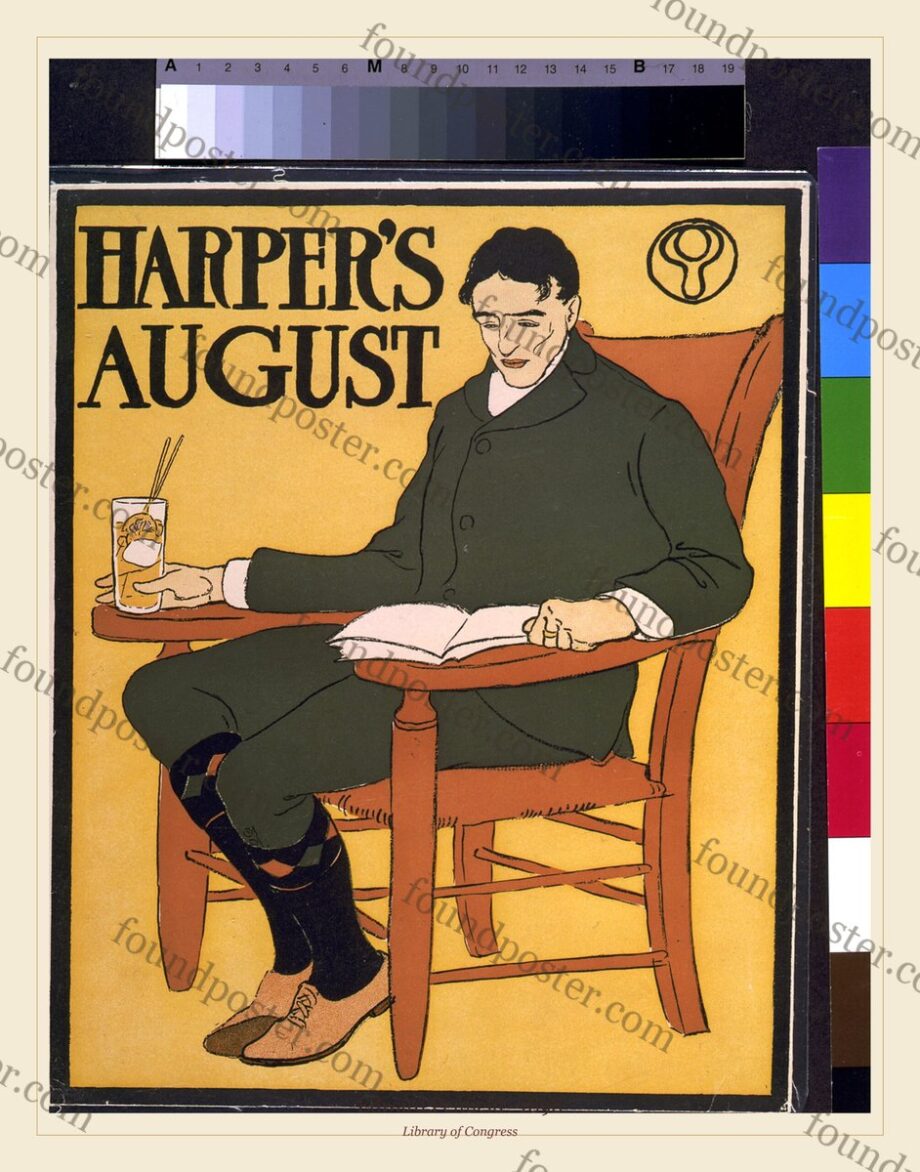
TL;DR — The best paper for a vintage poster is an uncoated, acid-free matte fine-art stock of roughly 200–250 gsm, ideally with a slight tooth. It reproduces the flat, absorbent surface of the original lithographs, holds colour without glare, and lasts for decades without yellowing. This guide explains the reasoning — how the originals were printed, why matte beats gloss optically, and what ‘acid-free’ actually buys you — so you can brief any print shop with confidence.
By Found Poster · Published July 2026
What the originals were printed on
Nineteenth-century posters were run on cheap, uncoated wood-pulp or rag paper — stock chosen to be inked fast and pasted up, not to last. The surface was matte and slightly absorbent, so the lithographic inks sat in flat, even fields with no shine. That matte flatness is a defining part of how these images look.
To reproduce the artwork honestly, you are matching that surface, not improving on it. The paradox of a good reproduction is that a plainer, more ‘old-fashioned’ paper looks more authentic than a glossy modern one.
Matte versus gloss: the optics
Matte paper scatters light in all directions, so the colours read evenly from any angle. Glossy paper reflects light in a single direction, which is why a glossy print becomes a mirror under a spotlight or opposite a window — exactly the lighting of a bar or restaurant. For a flat-colour poster, gloss also adds a plastic sheen the original never had. Matte is not a matter of taste here; it is the correct reproduction of the medium.
Weight and texture
Aim for roughly 200–250 gsm (grams per square metre). That weight sits flat in a frame and feels substantial; much lighter buckles, much heavier is pointless behind glass. A slight tooth — papers sold as ‘fine art,’ ‘etching,’ ‘litho’ or ‘rag’ — echoes the original uncoated stock without distracting from the image.
Avoid canvas: it softens the crisp outlines that define Art Nouveau, and its weave fights the flat lithographic look. Canvas suits paintings, not posters.
Acid-free and archival
If you want the print to survive decades without browning, ask for acid-free (archival) paper. Ordinary paper contains lignin and residual acids that oxidise over time, turning the sheet yellow-brown — the process you see in old newsprint. It accelerates in warmth, smoke and humidity, which describes most bars and kitchens. Cotton-rag or alpha-cellulose papers are inherently acid-free and are what conservators specify for works on paper. It is the cheapest form of insurance a print can have.
How to brief the print shop
Ask for: a matte, acid-free fine-art paper around 200–250 gsm; printing at the file’s native size and about 300 DPI; and no automatic sharpening or colour correction. Our files are already prepared for output, so the shop’s only job is to print them faithfully. If they offer a proof, check it under the kind of light the poster will actually hang in.
Our files are built for exactly this kind of printing — flat, matte, archival. Browse American Art Nouveau →
Frequently asked questions
Does paper choice really matter?
Yes — after print size, it is the biggest visible difference. Matte, textured fine-art paper alone makes a reproduction look far closer to an original lithograph.
What does acid-free actually do?
It stops the paper yellowing and becoming brittle over years. Acid and lignin in cheap paper oxidise and brown; acid-free cotton-rag or alpha-cellulose stock stays stable for decades.
Can I skip glass if I use matte paper?
You can, and matte paper at least avoids the plastic look of gloss, but glass protects against grease, dust and humidity in a working room. Framing is covered separately in this series.
Further reading
- How to print and frame a vintage poster
- Framing posters without glare — glass, mounting and light (scheduled in this series)
- AIC (American Institute for Conservation), guidance on papers for works on paper
Found Poster restores Belle Époque and Art Nouveau posters from museum archives into archival-quality files you print yourself. Browse the archive · How to print & frame.