TL;DR — A vintage poster reproduces beautifully at home if you respect how it was originally made. These were large lithographs printed on uncoated paper, so they want a high-resolution file, a matte fine-art stock, and a frame that controls glare and acid. This guide walks through resolution, paper, mounting and glass — the four decisions that separate a print that looks like museum stock from one that looks like a photocopy — with the reasoning behind each, not just the rule.
By Found Poster · Published July 2026
How these posters were originally printed
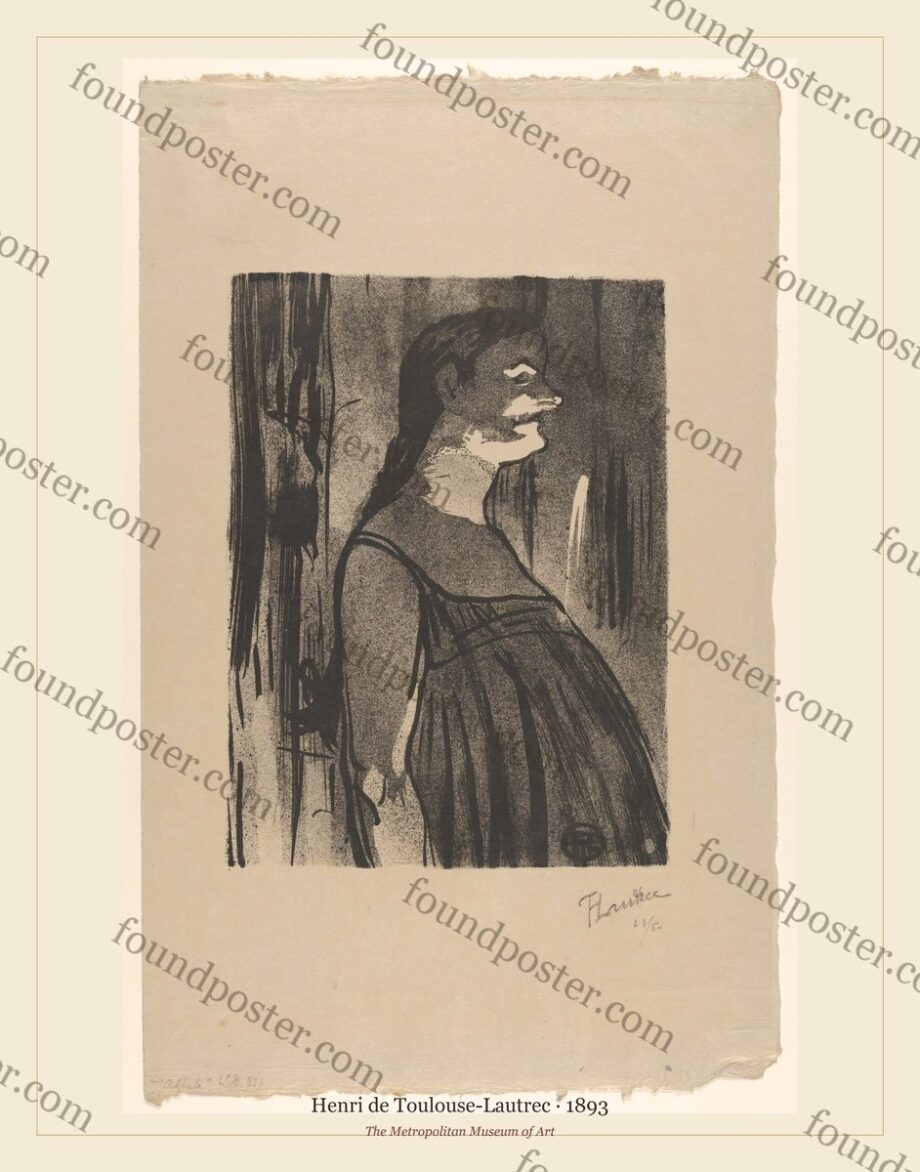
Belle Époque and Art Nouveau posters were colour lithographs: the artist drew each colour on a separate limestone or zinc plate, and the printer built the image up in successive passes of flat, opaque ink on cheap uncoated paper. There was no gloss, no photographic sheen — the surface was matte and slightly absorbent, and the colours sat as flat fields.
That origin dictates every choice below. The look you are trying to reproduce is flat matte colour on a paper with a little tooth. A modern glossy photo print fights the artwork; a matte fine-art paper completes it. Understanding the source is the whole game.
Resolution: the one number that matters
Print quality is governed by resolution — the number of dots of ink per inch (DPI) at the final size. The working standard for a sharp art print is roughly 300 DPI. Our files are prepared to print cleanly at 16×20 inches and, for the bolder designs, well beyond.
The trap is enlargement. If you take a small, low-resolution image and blow it up, the software invents pixels and the result looks soft or blocky — no paper or frame can rescue it. Start from a file built for the size you want, which is exactly what an archival scan restored for print gives you.
Paper: matte, weight and acid
Ask a print shop for a matte or lightly textured fine-art paper, around 200–250 gsm (grams per square metre). That weight sits well in a frame; much lighter feels flimsy, much heavier is unnecessary behind glass. A slight tooth — papers sold as ‘fine art,’ ‘etching,’ or ‘litho’ — mimics the original uncoated stock.
If you want the print to last decades without yellowing, ask for acid-free (archival) paper. Cheap paper contains lignin and acids that brown over years, especially in a warm, smoky, or humid room. Acid-free stock is the single cheapest insurance against a print ageing badly.
Framing: mount, glass and light
Two framing choices protect the print. First, an acid-free mat board (the border between artwork and glass): it keeps the paper off the glass so condensation can’t stick, and, being acid-free, it won’t brown the edges. Second, the glazing: anti-reflective or ‘museum’ glass cuts the mirror-like reflections that make a framed print look cheap under bar lighting, and UV-filtering grades slow fading.
Have the print hinged, not glued, with reversible acid-free tape, so it can be removed later without damage. A plain dark or gilt wood frame suits the period; the frame should serve the poster, not compete with it.
A practical workflow
In order: download the full-resolution file; choose your print size (16×20 is the safe default for a public room); send it to a print shop asking for matte, acid-free fine-art paper at ~300 DPI with no auto-sharpening or colour correction; then frame with an acid-free mat, hinged mounting, and anti-reflective glass. Each step is inexpensive on its own, and together they turn a small digital file into a piece that reads as genuine on the wall.
Every file in our archive is prepared from a high-resolution scan for exactly this workflow. Browse the archive →
Frequently asked questions
Do I get a print or a digital file?
A digital file. You download a high-resolution image and have it printed yourself — at a local shop or an online service — which is what keeps a gallery-quality poster inexpensive and lets you choose your own size and paper.
What size should I print for a bar or restaurant wall?
16×20 inches is a strong single-wall baseline; go to 24×36 for a feature wall. A dedicated guide to sizing and standard frames follows later in this series.
Why matte and not glossy paper?
Because the originals were printed matte on uncoated stock. Gloss adds a reflective, modern sheen the artwork never had and turns into a mirror under bright lighting.
Will the print fade or yellow?
Not if you use acid-free paper and mat board and UV-filtering glass. Those three choices are what conservators use to keep works on paper stable for decades.
Further reading
- How to print & frame (store guide)
- The best paper for art-print posters — a deeper look at stock (scheduled in this series)
- Framing posters without glare — glass and placement (scheduled in this series)
- AIC (American Institute for Conservation), guidelines on framing works on paper
Found Poster restores Belle Époque and Art Nouveau posters from museum archives into archival-quality files you print yourself. Browse the archive · How to print & frame.