TL;DR — For a public room, 16×20 inches is the safe baseline and 24×36 the feature-wall size. But the right answer comes from three things: the resolution of your file, the wall and viewing distance, and the design itself — bold flat-colour posters were made to be seen big, detailed magazine covers less so. This guide explains how the originals were sized, how to match a print to a room, and which sizes frame cheaply off the shelf.
By Found Poster · Published July 2026
The originals were big
The posters these files come from were large by design. French printers worked to named sheet sizes — colombier, grand-aigle and their doubles — and a single cabaret or apéritif poster commonly stood well over a metre tall, pasted on a wall or a Morris column to be read across a boulevard. They were public objects, meant to carry at distance.
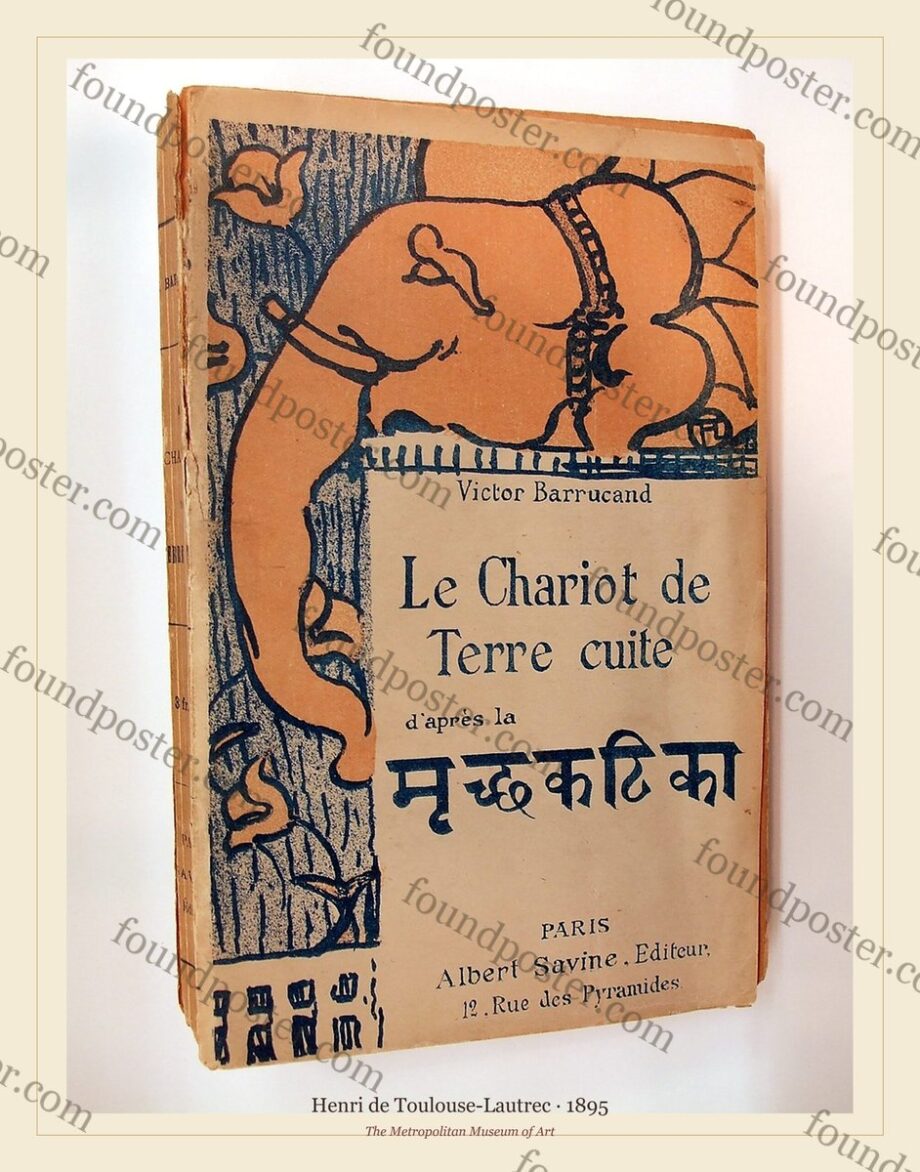
That is worth knowing because it tells you the designs can take scale. A Lautrec or a Cappiello does not become ‘too big’ at 24×36 — it returns to roughly the presence it was drawn for.
Resolution sets the ceiling
Your file’s resolution sets the largest size you can print sharply. At about 300 DPI our files print cleanly to 16×20, and the bolder designs go larger; past a file’s ceiling the image softens. If you are unsure, the printing guide in this series covers resolution in full — the short version is to start from a file built for the size you want rather than enlarging a small one.
Match size to wall and distance
As a rule of thumb, a framed poster should fill roughly half to two-thirds of the open wall it sits on. A small frame on a big feature wall looks lost; the fix is to size up or to hang a group of pieces as one composition.
Viewing distance matters just as much. Step back to where guests will actually stand — across a bar, down a corridor — and size so the design still reads from there. The further the sightline, the larger the print.
When to go large, when to hold back
Go large — 24×36 or more — for posters built on flat colour and bold shapes, which were engineered for street scale and only gain from it. Hold nearer 16×20 for detailed magazine-cover designs, where fine line work rewards a closer look and a huge print can feel thin.
Standard sizes that frame cheaply
Stick to sizes with off-the-shelf frames — 11×14, 16×20, 18×24, 24×36 — and you avoid the cost of custom framing. As a quick room guide: 11×14 or 16×20 for a salon nook or small bar; 16×20 for a single bistro wall; 24×36 or a group for a feature wall. Paper choice, which changes the feel at any size, is covered separately in this series.
Every file in our archive lists the sizes it prints sharply at. Browse the archive →
Frequently asked questions
How big can I print these files?
Sharply to 16×20 inches, and larger for the bolder flat-colour designs, printed at about 300 DPI. Each file notes its recommended maximum.
What is the most useful single size?
16×20 — it suits most single walls in a bar, bistro or salon and uses standard, inexpensive frames.
Can I print bigger than recommended?
You can, but past the file’s resolution ceiling the image softens. For a genuinely large feature wall, choose a bold design built to take the scale.
Further reading
- How to print and frame a vintage poster
- The best paper for art-print posters
- A guide to standard poster sizes — fuller size charts (scheduled in this series)
Found Poster restores Belle Époque and Art Nouveau posters from museum archives into archival-quality files you print yourself. Browse the archive · How to print & frame.